When the Fandom Becomes the Trailer House: The Rise of Fan Editors in Official Campaigns
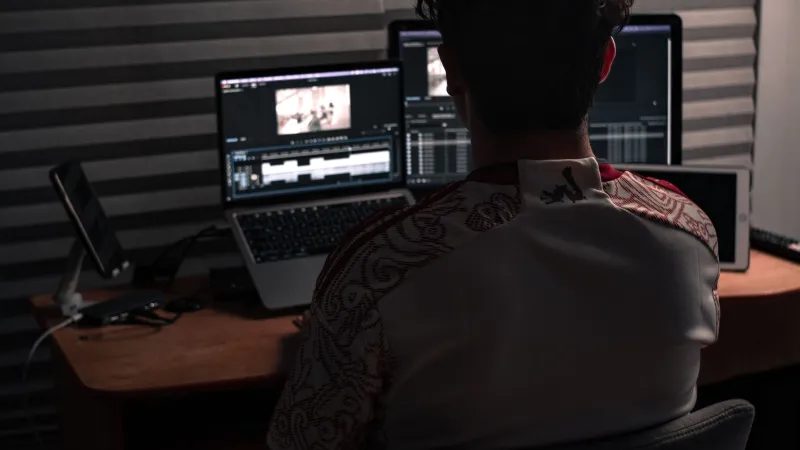
Fan edits used to live in the shadowy corner of the internet: a 90-second trailer recut, a character study set to the right song, a title sequence that made a mediocre show look like prestige television. Studios mostly ignored them, occasionally took them down, and rarely said thank you.
That era is ending. In 2026, marketing departments are not just watching fan editors. They are hiring them.
This is an opinion piece, but it is also a listicle, because the trend is best understood through the people doing the work. The short version: fan editing has become a farm system for trailer houses and social teams. The longer version is messier, more interesting, and full of questions the industry has not answered yet.
The new trailer pipeline
A modern streaming campaign is not one trailer anymore. It is a main trailer, a teaser, a date announcement, a character spot, a finale promo, a TikTok cut, a Reels cut, a YouTube Shorts cut, and a dozen regional variations. Marketing teams need volume, speed, and a feel for what audiences already love.
Fan editors are good at exactly that. They understand pacing, needle drops, and the specific grammar of a fandom. They know which shot will make people pause the video. They know why a certain line reads as a threat in one context and a joke in another. They have been making these choices for free, for years, for an audience that judges them instantly.
So studios have started bringing them inside. Sometimes it is a freelance gig for a social cut. Sometimes it is a short-term contract with a trailer house. Sometimes it is a full-time job on a marketing team. The title changes. The skill set does not.
Three editors who crossed over
The names below are composites drawn from conversations with editors and marketing staff in the fan-edit and trailer space. They represent three common paths into the industry, not three identical careers.
1. The rhythm editor
Maya started in Austin making 45-second rhythm edits of fantasy and sci-fi shows. Her cuts were fast, emotional, and built around sound design rather than dialogue. A social team at a mid-sized streamer noticed one of her edits had outperformed their own official clip. They hired her for a paid trial on a genre series, then brought her back for a full campaign.
Her advantage was not just speed. It was audience intuition. She knew where viewers would rewind. She knew which frame would become a reaction image. That kind of instinct is hard to teach in a marketing meeting.
2. The teaser specialist
Devon came up through anime music videos and game trailers. He was known for building tension with very little footage, which made him attractive to studios sitting on a first-look asset that was mostly atmosphere. He now works with a trailer house in Los Angeles on teaser cuts and international versions.
His story shows the awkward middle step in this trend. He was not hired as a fan. He was hired as an editor who happened to have a fan’s vocabulary. The industry wanted his taste without necessarily wanting to call it fan taste.
3. The title-sequence kid
Tess made fan-made title sequences for shows that had none, or for shows whose official openings felt forgettable. Her work was graphic, moody, and very shareable. A production company brought her in to pitch a first-look sequence for a new series. She did not get the main title, but she did get hired for social cutdowns and a digital campaign.
Her path is the most common and the least glamorous. Fan editors often enter through the side door: short-form assets, bonus content, and campaign extensions. The main title is still a different ladder. But the side door is open now.
The economics: cheap labor or fair start?
There is a generous read of this trend and a cynical one, and both are partly true.
The generous read: fan editors are finally getting paid for skills they developed in public. They understand online audiences in a way that traditional marketing teams often do not. Hiring them is a smart response to a fragmented media landscape.
The cynical read: studios are using fandom as a discount labor pool. Fan editors are used to working fast and for free, which can make them easy to underpay. A studio gets the credibility of a fan edit without the risk of an unofficial upload. The editor gets a line on a resume and, sometimes, a rate that does not match the value of the work.
The difference usually comes down to contracts, credit, and whether the editor has leverage. A paid trial is fine if it is actually paid. A short-term contract is fine if it is not a disguised audition for months of unpaid revisions. Exposure is not a rate.
The ethics: credit, consent, and canon
Fan edits raise questions that official marketing teams are still learning to answer. If an editor built a following by recutting a studio’s footage, what does the studio owe them when it hires them? If the editor’s style is built on a specific fandom, can the studio use that style on a different property without acknowledging where it came from?
Then there is the credit problem. Social cuts often go out under a brand account with no editor credited. That is normal in advertising, but it feels different when the editor’s original fan work was deeply personal and publicly shared. Fans notice who made the thing. They also notice when the person who made the thing disappears.
The legal side is not simple either. Fan edits rely on a shaky mix of fair use, tolerance, and platform policy. When a studio hires a fan editor, it is effectively bringing that gray area in-house. That is not automatically bad, but it should come with clear legal guidance, clear boundaries, and clear payment.
What good looks like
A healthy version of this trend would look boring in the best way. Paid trials with real budgets. Clear contracts that spell out usage and revisions. Credit where credit is possible. A firewall between a fan editor’s personal账号 and the official campaign. And a rate that reflects the fact that the editor is not just making a video. They are translating fandom for a corporation.
That last part is the whole story. Fan editors are not outsiders crashing the trailer house. They are the people who understand how the audience talks before the audience knows it is being marketed to.
Studios have noticed. Now they have to decide whether they are hiring fans or just borrowing their homework.