The 2 A.M. Cut: Inside Late-Night’s Overnight Race From Tape to Feed
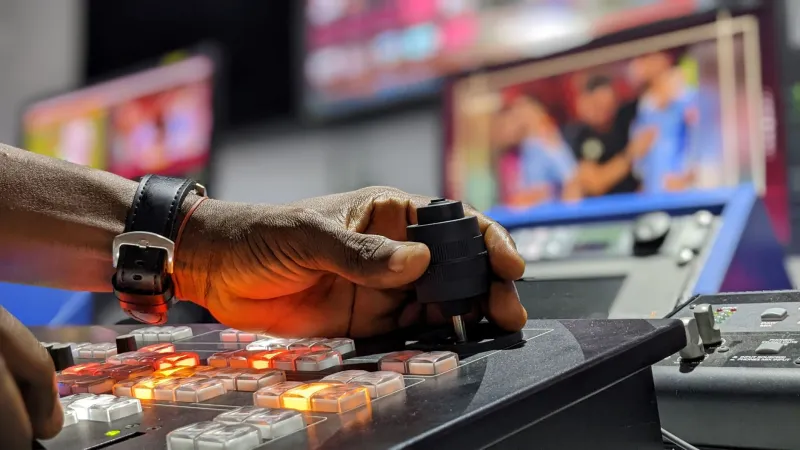
At 11:47 p.m. Eastern, the control room at a late-night show is usually down to its last tasks: clear the broadcast feed, confirm affiliate timings, and send everyone home. But on a Tuesday in October 2026, the real clock is in a room two doors down. A social producer is already scrubbing through the monologue, looking for the six-second stretch where the audience laugh rolls into the next punchline. An editor has the same tape open in another window, cropping it to 9:16. A standards coordinator is reading captions that haven’t been approved yet. The broadcast is done. The second edit is just starting.
The Handoff Starts Before the Applause Dies
The overnight assembly line doesn’t begin when the show ends. It begins when the show is still taping. In 2026, most late-night productions treat the social cut as a parallel track, not a leftovers bin. A producer in the control room flags moments in real time—a guest’s reaction, a prop that almost breaks, a joke that lands harder than it did in rehearsal. Those flags go into a shared doc with timecodes. By the time the host says goodnight, the clip desk already has a shortlist.
The first decision is almost never creative. It’s logistical. Which moments can be cleared for every platform? Which jokes depend on a visual that won’t survive a vertical crop? Which interview answer needs context that a 45-second clip can’t provide? The social producer and the segment producer usually make that call together, often while the credits are still rolling. The broadcast edit gets the full scene. The overnight edit gets the version that has to work without a lead-in, without a commercial break, and without the viewer knowing anything about the show except what’s in the frame.
One Joke, Three Aspect Ratios
Late-night TV has always been a timing business. The second edit adds a new layer: framing. A wide shot that kills in broadcast can look like a weather report in vertical. A two-shot with the host and guest may need to become a single on the guest’s face, because the host’s reaction is funny but the guest’s pause is the actual joke. Editors working the overnight shift describe the job as ‘re-directing without a director.’ They aren’t changing the performance. They’re changing where the viewer looks.
That often means building alternate cold opens. The broadcast cold open might run 90 seconds and land on a theme. The social cold open might be 12 seconds and land on a face. A YouTube cut might keep the full monologue but add a chapter marker. A TikTok cut might start mid-sentence, because the algorithm doesn’t care about setup and the audience has already scrolled past three other versions of the same clip. The goal isn’t to make one clip go everywhere. It’s to make a family of cuts that feel native to each feed.
Captions Are a Compliance Document
The least glamorous part of the overnight race is also the part that can stop it. Captions aren’t just accessibility; they’re a clearance record. A joke that references a brand, a song lyric, or a real person’s name may need a legal read before it posts. A guest’s anecdote may need a fact-check. A crowd reaction may need a music cue replaced if the clip travels outside the show’s licensed window. Standards and practices teams now review social cuts alongside broadcast cuts, often on the same overnight timeline.
That’s why the social producer’s job looks less like marketing and more like air traffic control. They’re tracking multiple versions of the same moment—broadcast, YouTube, TikTok, Instagram Reels, and whatever platform the show’s audience has migrated to this quarter—and each one has its own caption file, its own clearance status, and its own publish time. The clip that goes up at 7 a.m. Eastern may have been approved at 3 a.m. The clip that goes up at 7 a.m. Pacific may be a different edit entirely, because the West Coast feed needs a different cold open and the social team has learned that morning scroll behavior isn’t the same in every time zone.
The Cold Open That Only Exists Online
One of the stranger artifacts of the second edit is the alternate cold open. Broadcast viewers see the version that sets up the show. Online viewers often see a version that sets up the clip. In 2026, some late-night shows commission both at the script stage, knowing the social version will be shorter, faster, and built around a single reaction. The host may read the same setup twice, once for air and once for the vertical cut, with a slight change in pace. The editors then match the two performances so the online version doesn’t feel like a deleted scene.
That’s a craft decision with a budget line. It means the show needs a social producer in the room during taping, an editor on call after the taping, and a standards coordinator who isn’t surprised by a 2 a.m. Slack message. It also means the writers’ room has to think about what a joke looks like without its lead-in. A punchline that depends on a 30-second setup may need a shorter cousin for the feed. The second edit isn’t a remix of the first. It’s a second production plan.
Why the Second Edit Is Now in the Budget
A few years ago, the overnight clip was often an afterthought—a producer with a laptop and a login. In 2026, it’s closer to a standing department. Shows hire editors specifically for social cuts, not just broadcast episodes. Post houses sell ‘same-night’ packages that include vertical reframes, captioning, and platform delivery. The turnaround times have compressed from ‘by tomorrow afternoon’ to ‘by the morning commute,’ and the difference between a clip that posts at 6 a.m. and one that posts at 10 a.m. can be the difference between a trend and a shrug.
None of this replaces the broadcast edit. The broadcast cut is still the canonical version, the one that gets submitted for awards and discussed on podcasts the next day. But the second edit is where a lot of the audience actually meets the show. That’s why the overnight team gets notes from the same producers who shape the broadcast—and why the clip desk now has a say in which moments get flagged during taping. The assembly line runs in both directions.
Morning Is the New Overnight
By 8 a.m., the control room is quiet again. The broadcast feed is a memory. The social feed is a scoreboard. The overnight editor has gone home, the captions have been approved, and the alternate cold open is already collecting comments from people who never watched the show live. The second edit didn’t replace the first. It extended it—into a vertical frame, a shorter setup, a caption file, and a morning routine that now counts as part of the production day. In late-night TV, the applause still ends the show. But the work now follows the viewer home.