Cold Lasagna, Hot Lights: Inside the Continuity Kits That Keep TV Meals Camera-Ready
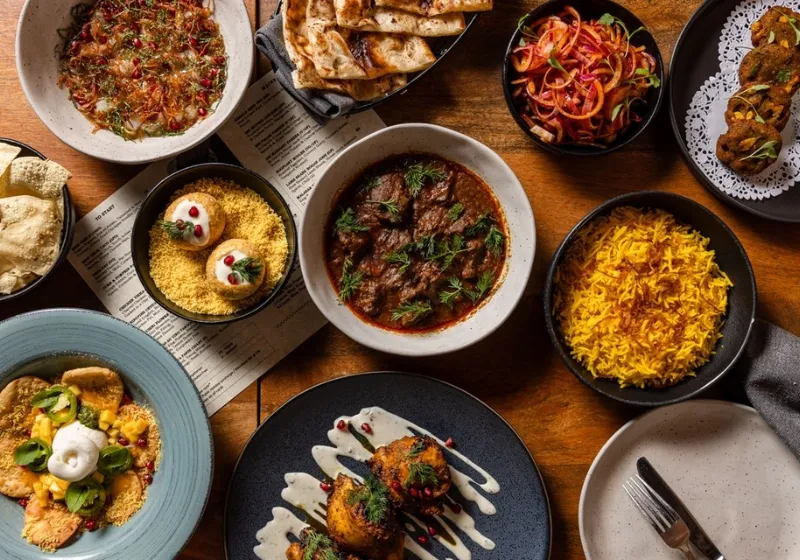
Photo: food stylist preparing plate on film set with tweezers and continuity photos, via media1.agfg.com.au
A dinner scene on television rarely begins with dinner. It begins with a folding table, a roll of paper towels, and a stylist quietly asking whether the director wants the lasagna to look untouched, picked at, or emotionally abandoned. The actors arrive later. The food has already been in hair and makeup.
That is the first thing to understand about on-screen meals in 2026: the plate is a performer. It has a call time, a costume, a continuity photo, and a backup. Sometimes it has three backups. The food stylist’s continuity kit is the small, portable kitchen that keeps that performance from falling apart between takes.
The Kit Is a Kitchen That Folds Into a Car
A food-styling kit for scripted TV looks less like a chef’s knife roll and more like a very organized emergency room. There are tweezers for placing individual peas. There are small squeeze bottles of sauces matched to the show’s color palette. There are brushes, cotton swabs, paper towels, food-safe sprays, and enough clear acrylic ice to chill a hundred fictional cocktails.
The kit also carries the less glamorous stuff: duplicate plates, spare napkins, color-matched crumbs, glycerin for condensation, and a small steamer or kettle for the illusion of a meal that just left the stove. On a recurring dinner-table set, the stylist may build what crews call a “continuity tray” — a lineup of plates in different states of eaten-ness, each one photographed from the camera’s angle before the first take.
That tray is the difference between a scene that cuts together and one where a character’s broccoli teleports between shots.
The Plate Map Is the Real Script
Continuity is not only about what is on the plate. It is about where it sits. A food stylist and the continuity supervisor will often make a simple plate map: the smear of sauce at four o’clock, the fork resting at two o’clock, the bite missing from the front edge. On a long dialogue scene, those details become the visual punctuation between lines.
If an actor actually eats, the stylist has to track how much. If the actor is not supposed to eat — because the scene runs eight takes and the director needs the same half-eaten dinner to survive lunch — the actor may chew and discreetly discard, or work with a “spit bucket” kept off-camera. The plate gets swapped for a fresh duplicate matched to the same bite count.
This is where the kit’s low-tech tools matter most. Tweezers replace a missing piece of pasta. A dab of sauce rebuilds a smear. A tiny brush re-oils a surface that has gone matte under the lights. The goal is not to fool a restaurant critic. The goal is to fool a camera moving from a wide shot to a close-up without giving the audience a reason to think about the food at all.
Hot Lights, Cold Food, Sharper Cameras
Television food has always been a compromise. Real meals wilt, separate, and cool. Under hot lights, a salad can go limp in minutes. Sauce can develop a skin. Ice melts. Steam disappears.
In 2026, the compromise is more visible than ever. Streaming dramas and comedies shoot with sharper sensors and longer lenses, and a dinner-table close-up can make a single oil bubble look like a plot point. Food stylists now think in terms of texture under 4K: the sheen on a piece of chicken, the crumb structure of bread, the way a glass of water catches a practical lamp. Fake ice is often acrylic. Steam may come from a hidden source just off-frame. Herbs get swapped for fresher sprigs between setups. A hero plate is built for the close-up; a background plate is built to survive the wide.
The pressure is not just technical. It is temporal. Longer takes and fewer cuts mean the food has to hold its performance for longer stretches. A single-camera family dinner can run for pages of dialogue, with the camera circling the table while the meal sits there, slowly becoming less appetizing and more of a continuity problem.
The Meal Is Part of the Story
A good food stylist is not just maintaining appearances. They are reading the scene. A sad bowl of cereal, a birthday cake with one candle missing, a tense holiday dinner where nobody touches the turkey — these are visual character notes. The continuity kit has to protect those notes take after take, even when the director wants a new angle and the actors need a water break.
That means coordinating with props, costume, and the continuity team. It means knowing which actor is left-handed, which plate is supposed to be the “good” china, and whether the script says the casserole is untouched or half-gone. It also means accepting that the best work is invisible. If the audience notices the food, something has gone wrong. If they notice the silence around the table, the craft has done its job.
So the next time a TV family sits down to a complicated dinner, look past the dialogue for a second. The lasagna is probably cold. The ice is probably plastic. The peas have likely been placed by tweezers. And somewhere just outside the frame, a stylist is holding a photograph of a plate and making sure the lie still looks delicious.