The Scan Before the Scene: How AI Doubles Are Reshaping Background Work in 2026

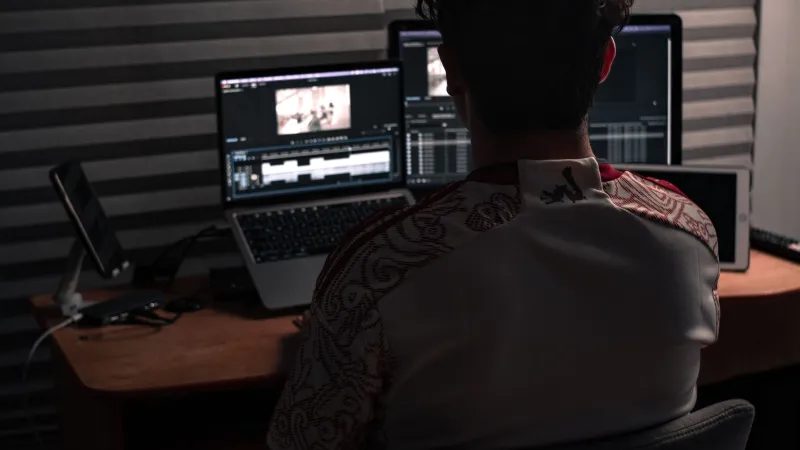
Photo by Photo by Brands&People on Unsplash on Unsplash
On a Tuesday morning in Atlanta, a background actor steps onto a scanning stage before she ever reaches set. She stands in a rig, holds a neutral expression, and turns slowly while cameras capture her face, posture, and wardrobe. The scan takes minutes. The questions around it take much longer.
In 2026, digital scans and AI doubles are no longer a hypothetical clause in a studio contract. They are part of the working reality for background actors, stand-ins, and the VFX teams who build crowd scenes. The technology is not new, but the workflow is. Productions are scanning performers earlier, asking for broader usage rights, and adding new language to call sheets and release forms. The result is a quiet renegotiation of what it means to be background talent in the streaming era.
The New Call-Sheet Language
Call sheets used to be simple: arrival time, wardrobe, set location, and a contact. Now some background actors are seeing lines like ‘digital scan consent,’ ‘AI double rider,’ or ‘replica usage terms.’ The language varies by production, but the intent is similar: secure permission to create a digital version of a performer and use it in ways that may not be fully known at the time of the scan.
One background actor in Los Angeles says she was asked to sign a scan release during a fitting for a streaming series. ‘It was presented as routine,’ she says. ‘They said it was for crowd replication and continuity. But the form did not say how long they could use it or whether it could show up in a different season.’
Productions argue that scans can save time and money. A digital double can fill out a stadium crowd, replicate a background performer across multiple takes, or replace someone in a dangerous or distant shot. VFX supervisors say the scans are often used for continuity, not for replacing principal actors. But the boundary between ‘background’ and ‘digital asset’ is exactly where the debate is happening.
Consent, Compensation, and the Buyout Problem
The consent question is not only about whether a performer agrees to be scanned. It is about what they are agreeing to. A one-time scan can become a reusable asset. A crowd scene can become a template. A digital double can appear in a sequel, a spin-off, or a marketing campaign. The performer may not know any of that when they sign.
Compensation is the other pressure point. Some productions offer a flat scan fee. Others fold the scan into the day rate. A few are experimenting with residuals or usage-based payments, but those models are not standard. Background actors and their advocates argue that a buyout can be unfair if the digital replica has a long life beyond the original shoot.
‘If you are going to use my likeness in perpetuity, that is not a background rate,’ says a stand-in who has worked on network and streaming productions. ‘That is a licensing deal. It should be treated like one.’
Union contracts have started to address the issue. Since the 2023 SAG-AFTRA strike put AI on the bargaining table, the follow-through has been uneven. Some productions have clearer consent forms and compensation schedules. Others are still using broad language that performers say is difficult to challenge on a crowded call sheet.
What AI Doubles Do to On-Screen Texture
There is also the question of authenticity. Background performers are not just filler. They give a scene texture: the way a crowd moves, the way a waiter reacts, the way a pedestrian crosses a street. A digital double can replicate a body, but it does not always replicate the small, human decisions that make a background performance feel alive.
VFX artists say the technology works best when it is invisible. A digital double filling out the back row of a concert is different from a digital double standing next to a principal actor in a close shot. The closer the camera gets, the more the illusion has to hold. That is why some directors still prefer real extras for certain scenes, even when a scan is available.
‘Audiences may not know why a crowd feels off, but they feel it,’ says a VFX coordinator who has worked on episodic series. ‘A digital crowd can look perfect and still feel rubbery. The performances are too even. Real background actors bring mess.’
Below-the-Line Careers in the Scan Economy
The shift is also changing career paths. Stand-ins, who once learned a principal actor’s blocking and lighting positions, are now sometimes asked to be scan subjects as well. Background actors worry about fewer days on set if productions can reuse digital doubles. Scanning technicians and digital asset managers are seeing new demand for their skills.
The effects are not uniform. Big-budget productions may still hire large crowds for authenticity and scale. Smaller productions may lean harder on scans to stretch a budget. Commercials, music videos, and branded content are already experimenting with digital doubles in ways that could preview what comes next for scripted television.
For below-the-line workers, the issue is not whether the technology exists. It is whether the terms are fair, transparent, and enforceable. A scan can be a tool. It can also be a landmine. The difference is in the paperwork, the rate, and the right to say no.
The Negotiation Continues
In 2026, the digital double economy is still being written. Call sheets are changing. Consent forms are getting longer. Conversations that once happened in contract negotiations are now happening at the fitting, the scan stage, and the background holding area.
The background actors who show up before the scene are used to being unseen. But the scans they leave behind may outlast the shoot. How US productions handle that trade-off will shape not only the look of crowd scenes, but the livelihoods of the people who fill them.