Seven Credits You Never Read—and the People Who Make the Magic Happen
Every awards season, the same faces walk the red carpet. But the magic on screen depends on people whose names scroll by in tiny type—if they appear at all. Here are seven behind-the-scenes crafts that deserve their own documentary, with short profiles and break-in advice from working US professionals.
1. The Colorist
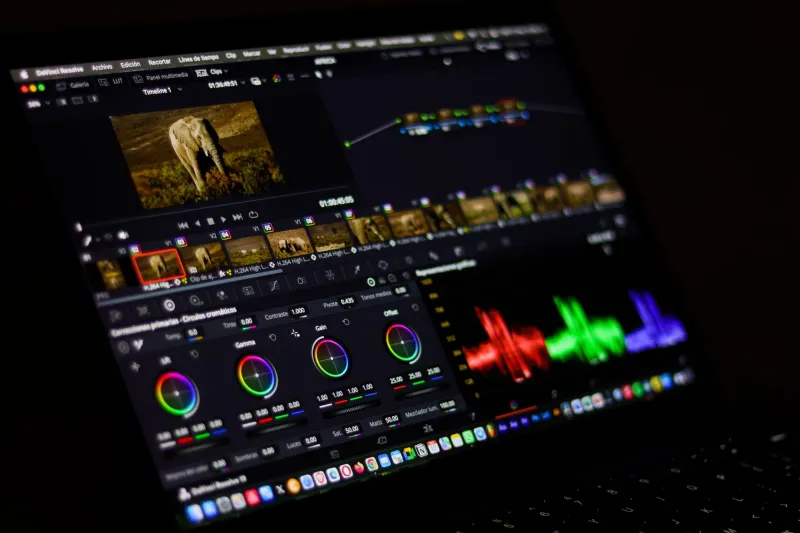
A colorist doesn’t just make footage look pretty. They control mood, continuity, and the emotional temperature of a scene. Los Angeles-based colorist Maya Chen has graded everything from indie features to streaming comedy specials. She says the job is equal parts technical and psychological.
‘Directors often know what they want to feel, not what they want to see,’ Chen says. ‘My job is to translate that into skin tones, contrast, and saturation without making the audience notice the seams.’
Break-in tip: Learn DaVinci Resolve inside out, assist at a post house, and build a reel that shows you can match shots, fix exposure, and create a consistent look across a scene. Chen recommends starting with short films and music videos, where you can experiment without a studio breathing down your neck.
2. The Foley Artist
Foley artists create the sounds you didn’t know you were hearing: footsteps, fabric rustles, coffee cup clinks, the soft thud of a body hitting a couch. A good Foley track makes a scene feel physical. A bad one makes everything feel like a soundstage.
Chicago-based Foley artist Andre Sims works out of a small studio filled with gravel, tile, wood, and a closet of old shoes. He says the craft is about performance, not just noise.
‘You have to match the actor’s weight and intention,’ Sims says. ‘If the character is sneaking, the footsteps can’t sound like a marching band.’
Break-in tip: Build a small Foley pit at home, practice syncing to picture, and learn Pro Tools. Sims suggests reaching out to post houses and offering to assist on indie projects. ‘Nobody hires a Foley artist who can’t keep time.’
3. The Script Supervisor
The script supervisor is the memory of the set. They track continuity, eyelines, props, and dialogue changes. When an editor needs to know whether an actor was holding a coffee cup in the wide shot, the script supervisor has the answer.
Atlanta-based script supervisor Renee Alvarez has worked on episodic TV and indie features. She says the job is part detective, part diplomat.
‘You’re not there to say no,’ Alvarez says. ‘You’re there to say, if we do this, here’s what breaks later.’
Break-in tip: Learn continuity software, take a script supervision workshop, and start on student films or shorts. Alvarez recommends building a reputation for calm, detailed notes. ‘Directors remember the person who saved them in the edit.’
4. The Location Scout
Location scouts find the worlds that scripts live in—the diner that feels like 1987, the apartment with the right light, the warehouse that can double as a spaceship. They negotiate permits, manage neighbors, and solve problems before the crew arrives.
Seattle-based location scout Ben Okafor says the job is about listening to the script and the director’s references.
‘Sometimes the perfect location is not the prettiest one,’ Okafor says. ‘It’s the one that lets the story breathe and the crew work.’
Break-in tip: Start by scouting for short films and photo shoots. Build a database of local spots, learn permit rules, and get comfortable with contracts and insurance. Okafor says a good scout is a good researcher first.
5. The Production Sound Mixer
The production sound mixer captures dialogue on set—often in impossible conditions. They battle traffic, wind, air conditioning, and actors who whisper. Good sound is invisible. Bad sound is all anyone talks about.
New Orleans-based sound mixer Tessa Grant says the job requires technical skill and social grace.
‘You have to be able to tell a director the truth about a noisy location without shutting down the day,’ Grant says.
Break-in tip: Learn boom operating first, then build a kit and shadow experienced mixers. Grant recommends taking every opportunity to record dialogue in challenging spaces. ‘Your reel should include scenes that look easy but sound great.’
6. The Costume Ager/Dyer
Costume agers and dyers make new clothes look lived in. They fade denim, stain work boots, soften collars, and create the visual history of a character’s life. It’s chemistry, artistry, and a lot of patience.
Los Angeles-based costume ager Lila Moreno says the goal is never to make something look simply old.
‘It’s about making it look like it belongs to this person, in this moment,’ Moreno says. ‘A jacket can tell you where someone has been.’
Break-in tip: Learn fabric types, dye processes, and aging techniques. Moreno suggests apprenticing with a costume house or working on indie films where you can experiment. Build a portfolio of before-and-after pieces.
7. The VFX Coordinator
The VFX coordinator keeps visual effects on schedule, on budget, and in communication with the production. They track shots, manage vendors, and translate between directors and artists. Without them, a single missing asset can stall a whole episode.
New York-based VFX coordinator Priya Desai says the job is about clarity under pressure.
‘You’re the traffic controller,’ Desai says. ‘If information gets lost, shots get lost.’
Break-in tip: Learn shot tracking tools, understand the VFX pipeline, and start as a production assistant in a post house. Desai recommends learning enough about compositing to ask smart questions. ‘You don’t need to be an artist. You need to speak the language.’
Why these crafts deserve a documentary
Each of these roles solves a different kind of invisible problem. They don’t get trailers or press junkets. They get deadlines. But their work is the difference between a scene that feels real and a scene that feels like a camera pointed at actors. A documentary series on these crafts wouldn’t just be a nice tribute. It would be a reminder that filmmaking is a collaboration—and that the best magic is the kind you never notice.