The Human Static: Inside a TV Loop Group Session

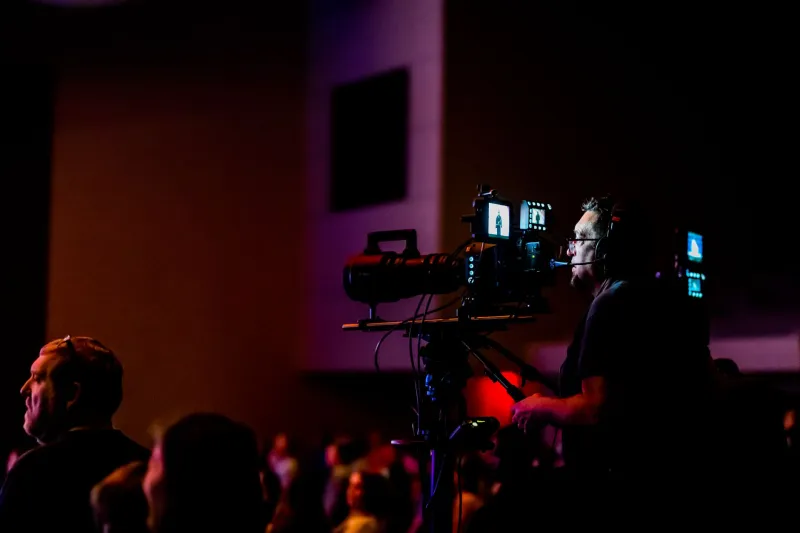
Photo by Photo by Tim Toomey on Unsplash on Unsplash
At 9:12 on a Tuesday morning in November, six actors stand in a semicircle at a North Hollywood recording studio, scripts in hand, eyes on a muted monitor. On screen, a hospital waiting room flickers: extras shift in molded plastic chairs, a nurse crosses frame, a vending machine hums. The actors are not watching the picture for cues. They are waiting for the engineer’s hand to drop.
Then it does. ‘Room tone, please,’ the session leader says. What follows is not dialogue. It is a controlled rustle of half-words, breath, chair creaks, and low-grade worry. One actor mutters about parking. Another sighs at a clipboard. A third laughs at nothing in particular. To anyone outside the glass, it sounds like a crowd. To the people inside, it is a job with its own grammar.
Welcome to loop group, one of television’s most reliable invisible crafts. The industry calls this walla—the ambient murmur that sits under a scene and tells your brain there are other people in the world. It is not ADR, where an actor replaces their own lines. It is not foley, where shoes and coffee cups get their close-up. Loop group is the human static that makes a TV set feel populated, and the performers who do it rarely see their names in the credits.
The Job You Hear but Never See
Loop group work is older than television. Radio dramas used small teams of actors to create crowd scenes, and early TV carried the habit forward. Today the job is still mostly performed by a rotating cast of voice actors, theater performers, and on-camera extras who can switch dialects and vocal textures on a dime. A single session might cover a bar in Boston, a stadium in Dallas, and a hospital hallway that exists only in post-production.
The actors are usually booked by a casting director who specializes in voice and crowd work. They do not audition with monologues. They audition with noise. A good loop group performer can produce a convincing party laugh, a distant argument, a bus announcement, a toddler meltdown, or the specific low rumble of a diner at 6 a.m. without ever stepping in front of a camera.
‘You are not playing a character,’ one session regular says between takes. ‘You are playing a room.’
Casting for Texture, Not Lines
In 2026, casting for walla is more specific than it used to be. Showrunners want crowds that sound like the places they are supposed to be. A scene set in Queens needs a different vocal grain than a scene set in Atlanta or rural Montana. Casting directors now ask for reels organized by region, age range, and energy level—‘bar murmur,’ ‘office hush,’ ‘stadium chant,’ ‘waiting-room anxiety.’
That specificity is partly a response to audiences. Streaming has made TV sound more layered, and viewers notice when a crowd sounds canned. A bar scene with the same six voices looped for three minutes feels thin. A hospital scene with no walla at all feels like a stage play. The fix is not more volume. It is better texture.
Dialect matters, too. A loop group may need a performer who can shift from a Chicago vowel to a Texas drawl without sounding like a sketch-comedy bit. The best actors in the room are not doing accents. They are doing people. That distinction is the whole job.
Take 14: The Politics of a Good Murmur
Back in the studio, the engineer plays the scene again. The director’s note comes through the talkback: ‘Less intelligible. More panic.’ The actors nod and reset. On the next pass, the murmur tightens. Words blur into breath. Someone coughs into a sleeve. Someone else laughs a half-beat late. The room sounds less like a recording and more like a place.
Loop group sessions are a strange mix of improv and precision. Actors are often given loose scenarios—‘you are waiting for news,’ ‘you are three drinks in,’ ‘you are annoyed but trying not to show it’—and then asked to overlap without stepping on the dialogue that will eventually sit on top. The engineer rides levels in real time, carving space for the leads. The goal is not clarity. The goal is believable blur.
It can take a dozen passes to get a crowd that feels alive but does not distract. The final mix will duck most of it under the scene. That is the point. If the walla is doing its job, you will never think about it.
The AI Question
No conversation about voice work in 2026 gets far without AI. Synthetic voice tools can now generate crowd beds, and some post houses use them for temp mixes, animated backgrounds, and low-budget scenes that need a quick fix. The technology is improving fast. It can produce a hundred voices at once, in any dialect, without a union contract or a parking spot.
But loop group actors and the people who hire them say the craft is not that simple. AI crowds tend to sound even. They lack the weird human stuff: the guy who laughs a half-beat late, the woman who coughs into her sleeve, the low side-conversation that rises and falls for no logical reason. Those imperfections are what make a crowd feel real. They are also hard to direct.
There is a labor story here, too. Performers’ unions have been negotiating voice-cloning guardrails, and casting directors say clients are still wary of using synthetic walla in final mixes for union productions. AI may be changing the temp track. It has not replaced the room. Not yet.
The Payoff Is Silence
By 11:40, the session is wrapping. The actors have recorded a bar, a bus terminal, and a hospital waiting room that will appear on screen for maybe ninety seconds. They pack up their scripts and compare parking validation. No one will watch the episode and say, ‘Great walla.’ That is the measure of success.
Television is full of these invisible bargains. Someone builds the crowd, someone mixes it down, and the audience hears only the story. For the loop group, the reward is a room that feels inhabited—and a credit roll that mostly leaves them out. The human static keeps humming anyway.