Three Words, Nine Approvals: The Odd Afterlife of a TV Episode Title
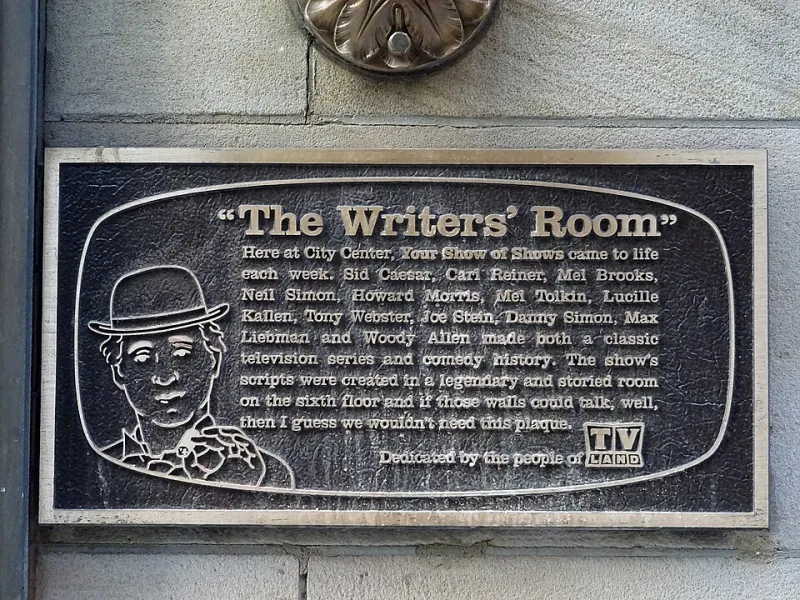
Photo: Spudgun67, CC BY-SA 4.0, via Wikimedia Commons
An episode title looks like the easiest part of television. It is not a scene, a budget line, or a visual effect. It is a few words at the top of a screen, often gone before the cold open ends. And yet, inside a working show, those words can pass through more hands than a stunt sequence. They get pitched as jokes, defended as art, checked for spoilers, translated for overseas markets, crawled by streaming search, and occasionally swapped out after the poster art has already been approved.
In 2026, episode titles are not just creative flourishes. They are metadata, marketing copy, search bait, and sometimes a minor legal headache. The process is rarely glamorous. It is, however, one of the clearest windows into how modern TV balances storytelling with the machinery around it.
It Starts as a Joke Nobody Else Gets
Most episode titles begin in the writers' room, and most of them begin badly. A room will generate dozens of options, many of them private jokes, puns that only work if you know a story editor's coffee order, or references to a scene that may not survive the next draft. The first pass is not about picking the best title. It is about giving the room enough bad titles to find a good one.
Showrunners tend to have rules, even if they claim not to. Some want titles that sound like chapter headings. Some want them to be invisible, so the episode can do the heavy lifting. Some want a title that lands as a joke after the final scene, a little reward for paying attention. The room usually knows within a day or two whether a title has the right temperature. If it needs explaining, it is probably already in trouble.
The Spoiler Test
Once a title survives the room, it faces the spoiler conversation. This is where a funny idea can become a liability. A title that names a character who is supposed to die, a location that should be a surprise, or a twist that marketing is holding back will get flagged fast. The question is not whether the title is accurate. The question is whether it tells the audience something they should learn from the episode itself.
Some shows solve this by going abstract. Others lean into misdirection. A title can be technically true and still feel like a wink. The best ones often work on two levels: innocuous before the episode, resonant after it. That kind of title is harder to write than it looks, because it has to survive both the viewer who reads the title card and the viewer who sees the title in a streaming queue three weeks later.
Metadata Is a Character Now
Streaming changed the job. An episode title is no longer just a label on a broadcast schedule. It is a search term, a thumbnail companion, and a line in a recommendation engine. Platform teams want titles that are distinctive enough to be findable but not so generic that they disappear. They also want consistency across a season, which can conflict with a writers' room that wants every episode to feel like its own short film.
This is where marketing and metadata folks enter the chat. They are not usually trying to rewrite the title. They are trying to understand it. Will it fit on a mobile screen? Does it read well next to the episode number? Does it create confusion with another show's episode in the same genre? In 2026, a title that plays beautifully on a TV screen can look like a typo in a vertical feed. The room often gets a note that sounds absurd until you see it in context: can we make it shorter without making it meaningless?
The International Pass
The international journey is its own mini-drama. Titles get translated, subtitled, and sometimes completely rethought for markets where a pun does not survive. A title that works as a dry joke in English can become a flat descriptor in another language. Dubbing teams need something speakable. Subtitling teams need something readable in two seconds. Marketing teams in other territories may want a title that signals genre more clearly than the original does.
None of this means the original title is wrong. It means the title is doing more work than the domestic audience realizes. A show can end up with a domestic title, an international subtitle, and a platform-specific display name that all point to the same episode. The writers' room rarely controls that entire chain. It just has to live with the results.
Legal Has a Seat at the Table
Legal review is usually the least romantic stop. Titles can brush against trademarks, song lyrics, famous phrases, or the kind of pun that some other rights holder already owns in a specific context. Most of these checks are routine. Some are not. A title that seems harmless in the room can trigger a conversation about clearance, and that conversation can end with a new title that nobody loves but everybody can live with.
The quiet negotiation is real. Marketing may have already built a social post around one title. The episode's composer may have named a cue after it. The closed-captioning team may have timed it into the opening card. Changing it late is not impossible, but it is not free. That is why experienced showrunners treat a title like a small piece of infrastructure: fun to design, annoying to move once it is load-bearing.
When the Title Changes After the Poster Prints
Late changes do happen. Sometimes a spoiler concern wins. Sometimes a legal note wins. Sometimes a platform insists. Sometimes the showrunner simply wakes up with a better idea. The result is a small scavenger hunt across the internet: old press releases, fan wikis, and streaming menus that disagree with one another. For viewers, it is trivia. For the production, it is a reminder that even the smallest creative choice has a paper trail.
The best episode titles feel inevitable once you have seen the episode. They seem like they were always there. They were not. They were pitched, argued over, shortened, cleared, translated, and sometimes replaced. The next time a title card flashes by, it is worth remembering that those few words had a whole journey before they reached the screen—and a few more people than you might expect helped them get there.